并不现代的软件开发(2)
注册、编译、动态路径与可视化:为了实现更加测试/迭代/agentic 友好的框架,我们需要哪些努力
现代的复杂框架测试
一个现实的问题是,对于一个复杂的代码库进行开发时,我们希望CI进行一些局部的和用例直接相关的测试,应该如何选择被触发的测试呢?
从最根本的角度思考,改动了哪些代码,执行到对应代码的CI就应该被触发。
由于我们面向的是python这种非常动态的语言(当然这类问题不仅限于python),因此这个问题基本指向了唯一的措施:编译。
给开发者看的编译
传统编译指的是将代码转换成机器码,然而我们实际上要做相反的事情,即将代码改动重新翻译会功能组件。
大型框架一开始总是精心设计的,但是随着不断迭代(不受约束的开发),逐渐功能之间越来越耦合,功能的耦合本身不直接带来问题,但是一旦设计到测试,就带来了很大的成本开销。
因此我们在开发中需要明确限制,某处修改更改/添加了什么组件,并完成相应的注册。
这样一来整个代码库会显示成为一个DAG图,而某个具体的测试代码会通过编译成为一个子图。
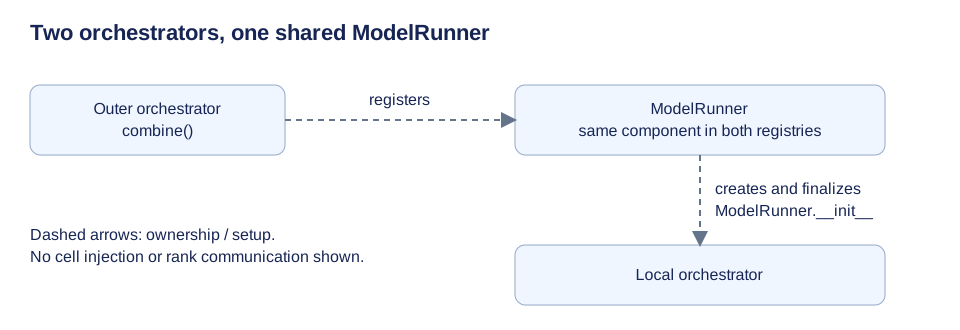
# ModelRunner.__init__ 中的原始片段
orch = RegistryOrchestrator()
self.model = wire_components(orch, self, config)
orch.finalize()
结构化开发
某个commit总可以被看作是:局部函数的修改或拓扑层面的修改。
关于前者,触发规则总是类似路径匹配的一些措施。
而关于后者,则需要更加全局的图匹配。
以下是一些例子 (better see https://github.com/Dutch-voyage/Artifact-Infer)
外层
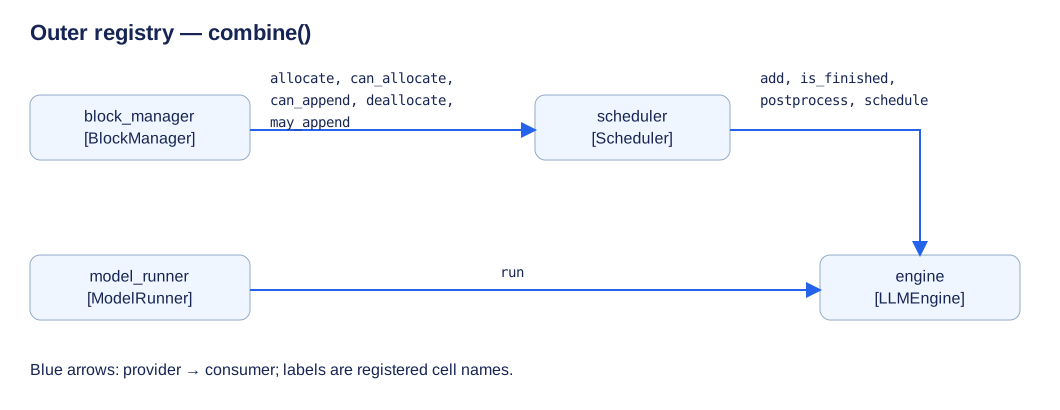
下面是 recipe 中完整的 combine():
def combine(**kwargs):
    reject_implementation_kwargs(kwargs)
    orch = RegistryOrchestrator()

    engine = orch.add(LLMEngine(**kwargs))
    config = engine.config
    model_runner = orch.add(
        ModelRunner(
            config,
            wire_components=wire_components,
            use_cuda_graph=USE_CUDA_GRAPH,
        )
    )
    block_manager = orch.add(BlockManager(config.num_kvcache_blocks, config.kvcache_block_size))
    scheduler = orch.add(Scheduler(config))

    engine.model_runner = model_runner
    engine.block_mngr = block_manager
    engine.scheduler = scheduler

    for name in ("can_allocate", "allocate", "can_append", "may_append", "deallocate"):
        orch.register(block_manager, name, scheduler)
    for name in ("add", "schedule", "postprocess", "is_finished"):
        orch.register(scheduler, name, engine)
    orch.register(model_runner, "run", engine)
    orch.finalize()

    return engine, SamplingParams
orch.add(...) 将四个外层组件加入 orchestrator;orch.register(...) 再明确它们之间的接口关系:
BlockManager → Scheduler:can_allocate、allocate、can_append、may_append、deallocate。Scheduler → LLMEngine:add、schedule、postprocess、is_finished。ModelRunner → LLMEngine:run。
局部
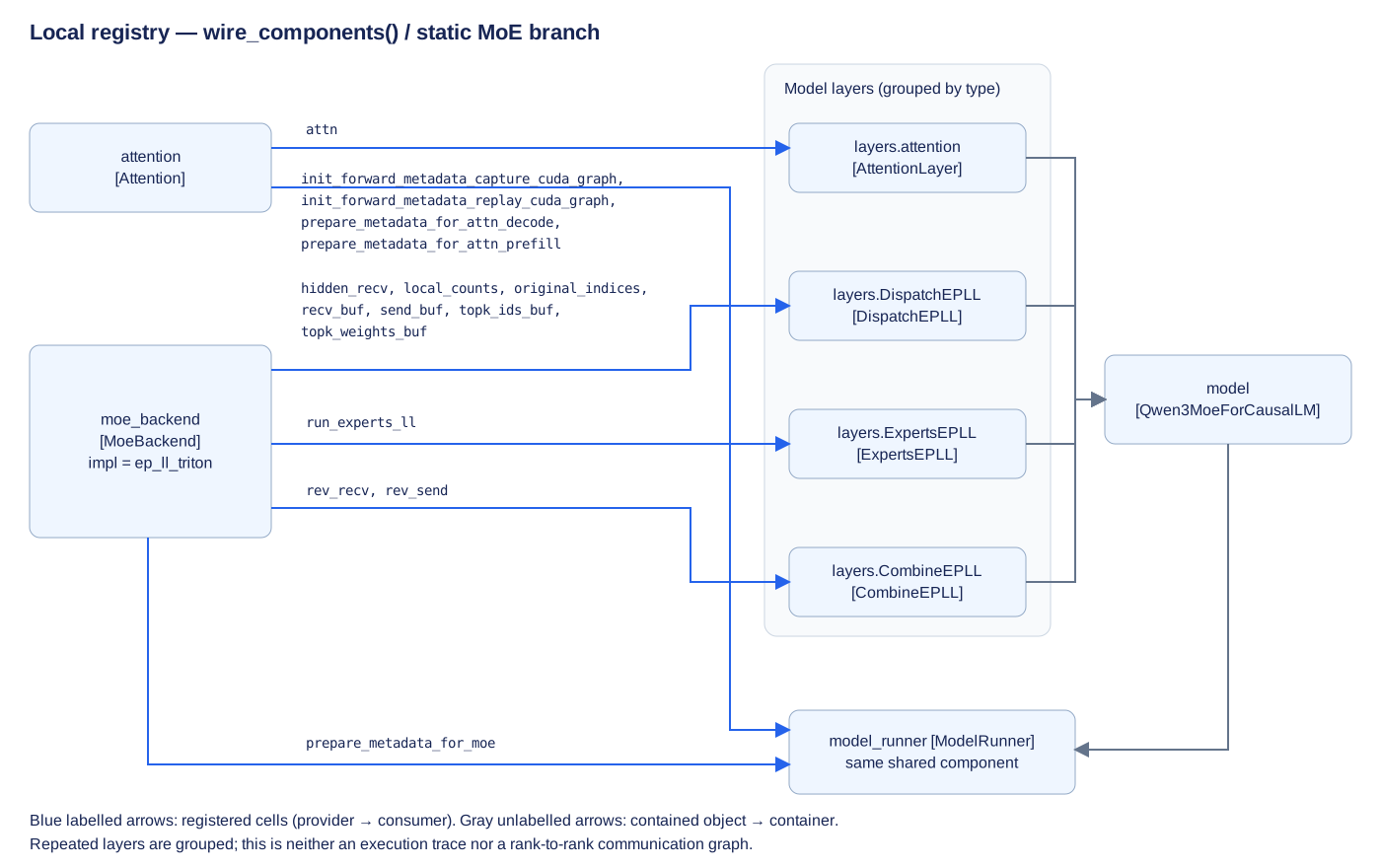
单独打开局部图查看完整标签。蓝色带标签的边仍然表示 cell 注册。灰色无标签的边按 被包含对象 → 包含它的对象 绘制:模型包含各层,runner.model 引用模型。
下面是完整的 wire_components(),包括源码中的非 MoE 分支,便于之后对照修改;上图只展示其中的 MoE 分支。
def wire_components(orch: RegistryOrchestrator, runner: ModelRunner, config):
    attention = orch.add(FlashinferAttention(config))

    is_moe = getattr(config.hf_config, "model_type", "") == "qwen3_moe"
    if is_moe:
        hf = config.hf_config
        moe_backend = orch.add(
            MoeBackend(
                config=config,
                num_experts=hf.num_experts,
                top_k=hf.num_experts_per_tok,
                hidden_size=hf.hidden_size,
                moe_intermediate_size=hf.moe_intermediate_size,
                impl=BACKEND_IMPL,
                block_size_m=BLOCK_SIZE_M,
                ll_m_max=LL_M_MAX,
                use_cuda_graph=USE_CUDA_GRAPH,
            )
        )
        model = orch.add(
            Qwen3MoeForCausalLM(
                hf,
                moe_block_size_m=BLOCK_SIZE_M,
                moe_mode="ep_ll",
                m_max=moe_backend.M_max,
                ep_ll_dispatch_kernel=DISPATCH_KERNEL,
            )
        )
    else:
        moe_backend = None
        model = orch.add(Qwen3ForCausalLM(config.hf_config))

    orch.register(attention, "init_forward_metadata_capture_cuda_graph", runner)
    orch.register(attention, "init_forward_metadata_replay_cuda_graph", runner)
    orch.register(attention, "prepare_metadata_for_attn_decode", runner)
    orch.register(attention, "prepare_metadata_for_attn_prefill", runner)

    for module in model.modules():
        if hasattr(module, "k_cache") and hasattr(module, "v_cache"):
            orch.register(attention, "attn", module)

        if moe_backend is None:
            continue
        if isinstance(module, DispatchEPLL):
            for name in (
                "send_buf",
                "recv_buf",
                "original_indices",
                "local_counts",
                "topk_weights_buf",
                "topk_ids_buf",
                "hidden_recv",
            ):
                orch.register(moe_backend, name, module)
        if isinstance(module, ExpertsEPLL):
            orch.register(moe_backend, "run_experts_ll", module)
        if isinstance(module, CombineEPLL):
            for name in ("rev_send", "rev_recv"):
                orch.register(moe_backend, name, module)

    if moe_backend is not None:
        orch.register(moe_backend, "prepare_metadata_for_moe", runner)
    return model
MoE 三类模块则明确通过 isinstance() 匹配:
| 使用者 | 来自同一个 MoeBackend 的 cell |
|---|---|
DispatchEPLL | send_buf、recv_buf、original_indices、local_counts、topk_weights_buf、topk_ids_buf、hidden_recv |
ExpertsEPLL | run_experts_ll |
CombineEPLL | rev_send、rev_recv |
ModelRunner | prepare_metadata_for_moe |